Introduction
Vedic astrology, also known as Jyotish Shastra, is an ancient system of astrology rooted in Indian civilization and the Vedas. The term "Jyotish" means science of light, signifying its role in illuminating our karmic path using the celestial bodies. Distinct from Western astrology, Vedic astrology is deeply philosophical, spiritual, and mathematical, offering profound insights into life's journey and purpose.
History of Vedic Astrology
The origins of Vedic astrology can be traced to the ancient Indian scriptures, especially the Vedanga Jyotisha, dated between 1500 BCE and 800 BCE. This text laid the foundation for astronomical observations and timekeeping in Vedic society. Jyotish later evolved into a more predictive science, mentioned in other important texts like the Mahabharata and the Atharvaveda, where constellations and planetary movements were closely linked with human destiny.
Early sages, such as Lagadha, contributed to the division of the zodiac and clarified the importance of planetary influences in daily life. While some scholars debate the possible influences from Hellenistic astrology, the consensus recognizes Jyotish as an indigenous and integral part of Indian spiritual tradition.
Philosophy: Cosmology and Karma
Vedic astrology holds that the universe is interconnected, and the planetary positions at birth reflect one's karma—the accumulated actions from past lives. This philosophy asserts that cosmic patterns shape our destiny, but also empowers individuals to make conscious choices and evolve spiritually.
Key philosophical concepts include:
• Advaita (Non-duality): The soul (Atman) is part of the ultimate cosmic reality (Brahman), highlighting oneness with the universe.
• Karma and Reincarnation: Our current circumstances result from choices made in prior lifetimes. The birth chart is seen as a map to help understand and transcend these karmic effects.
• The Three Gunas: All of creation is governed by three qualities—Sattva (purity), Rajas (activity), and Tamas (inertia). Vedic astrology guides us in balancing these tendencies for spiritual growth.
Guiding Principles of Jyotish
Jyotish relies on precise mathematical calculations and spiritual principles to guide individuals. Its main components are:
• The Planets (Navagrahas): Nine primary planets shape different aspects of life, each regarded as energy beings whose movements influence destiny.
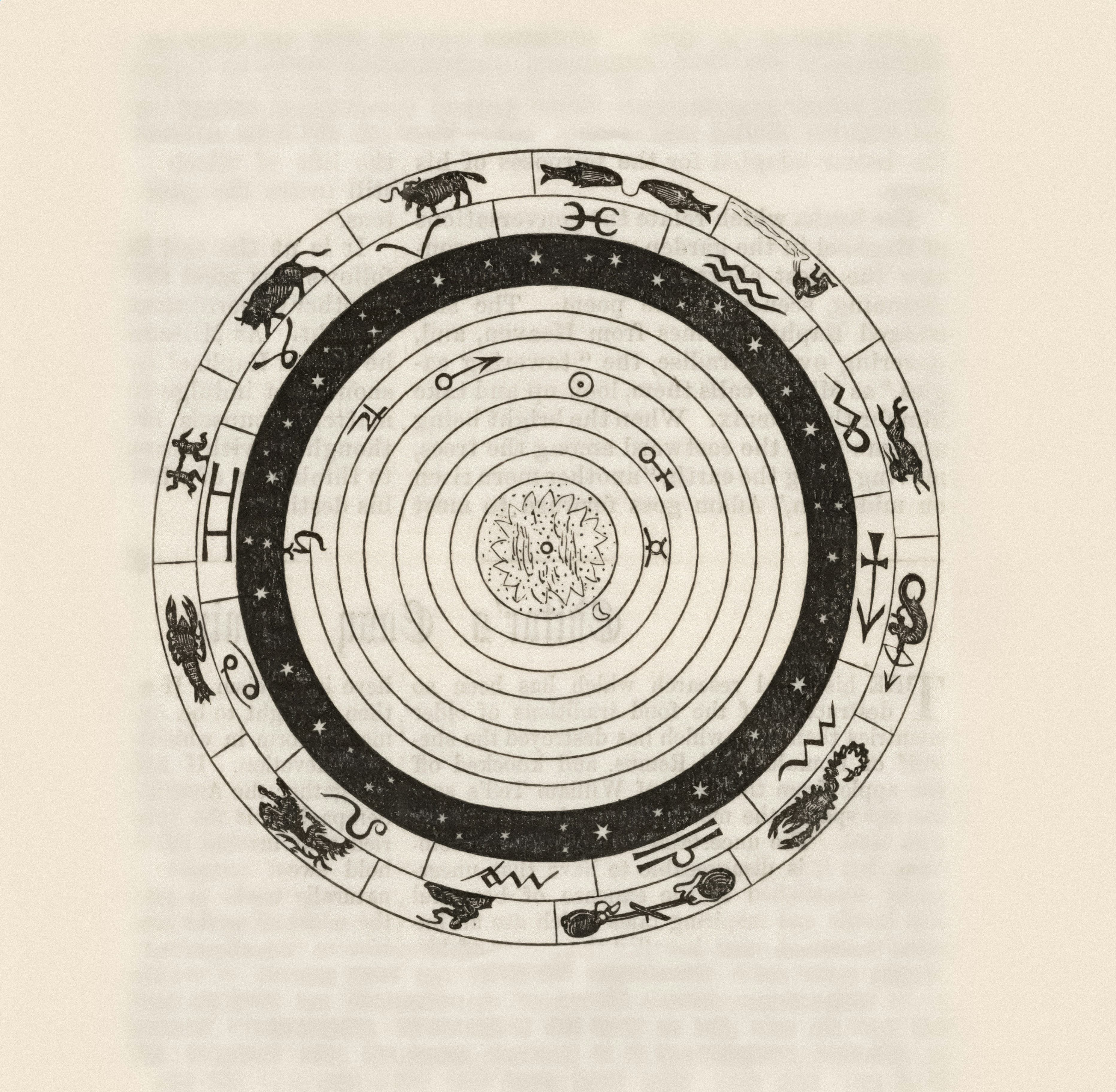
• The Zodiac (Rashis): Twelve signs and twenty-seven lunar constellations (Nakshatras) provide the framework for the birth chart.
• The Birth Chart (Janma Kundali): A cosmic fingerprint illustrating planetary placements at birth, revealing strengths, challenges, and potential.
• Bhavas (Houses): The chart is divided into twelve areas representing different facets such as health, wealth, relationships, and spirituality.
• Dasha System: Predictive technique that divides life into planetary periods, showing when specific energies will be dominant.
Modern Impact and Application
Vedic astrology remains highly relevant today, used for guidance in career, relationships, health, and self-realization. It is not considered deterministic, but rather a tool for making informed choices, understanding karmic patterns, and maximizing life's opportunities.
By understanding the wisdom of Jyotish, one can navigate life's journey with greater awareness, purpose, and harmony.
References
1. Wikipedia, "Hindu Astrology," https://en.wikipedia.org/wiki/Hindu_astrology
2. Pavitrajyotish.com, "Introduction of Astrology," https://www.pavitrajyotish.com/article/introduction-of-astrology/
3. Vedicspeaks.com, "Brief History and Philosophy of Vedic Astrology," https://vedicspeaks.com/history-philosophy-vedic-astrology/
4. SAS Publishers, "A Concise History of Hindu Astrology," https://saspublishers.com/article/1892/
5. Exotic India Art, "Understanding Vedic Astrology," https://www.exoticindiaart.com/vedic_astrology/
6. Vedicplanet.com, "A 12-Step Guide to Vedic Horoscope Interpretation," https://vedicplanet.com/horoscope-interpretation/
Photo by The New York Public Library on Unsplash

.png&w=3840&q=75)